
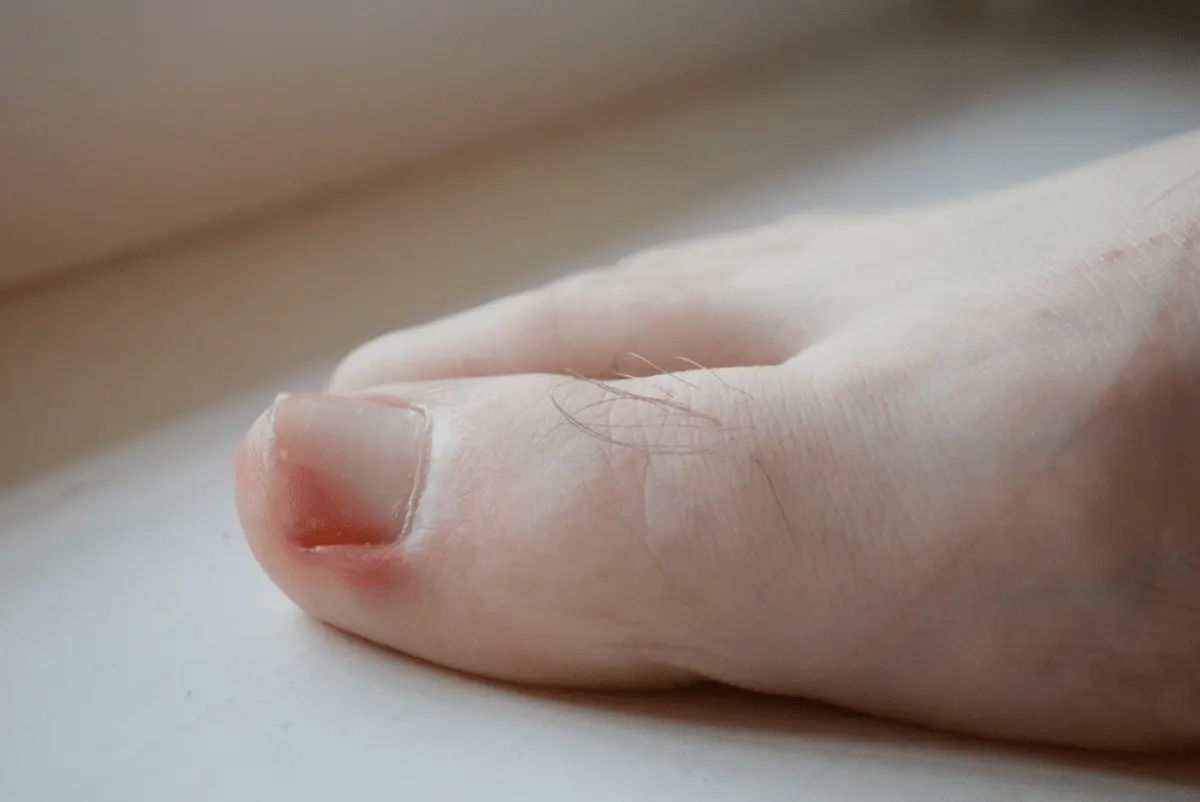
A lot of people are nonchalant about taking care of ingrown toenails, especially when it’s a mild case. This is largely due to the belief that toenails can fix themselves. But how true is that? Find out below.
Ingrown toenails generally do not fix themselves. While some mild cases of ingrown toenails may show temporary improvement, expecting self-resolution is not always reliable. It’s advisable to treat ingrown nails and seek medical intervention if the pain persists.
In this blog post, I’ll cover how to treat ingrown toenails, when to see a doctor concerning ingrown toenails and how to prevent it.

How to Treat Ingrown Toenail

Now that you know ingrown toenail can’t fix itself, here is how to treat it;
1. Warm water soaks
Begin your ingrown toenail treatment by soaking your affected foot in Epsom salt and warm water solution for 15-20 minutes. This helps soften the skin and nails to make lifting the ingrown edge easy. Also, it can help reduce inflammation and alleviate pain associated with ingrown toenails.
2. Gently lift the ingrown edge
Using a clean and sanitized tweezer, gently lift the ingrown edge of the toenail. Be cautious not to force or cause additional trauma. This process can provide relief by easing the nail away from the skin.
3. Put cotton under the nail
After lifting the ingrown edge, place a small piece of cotton or dental floss under the raised corner. This helps direct the nail away from the skin, promoting proper growth.
4. Proper nail trimming
Trim your toenails straight across and avoid rounded edges to prevent future ingrowth. Ensure your nails are neither too short nor too long, maintaining a moderate length for optimal foot health.
5. Antibiotic ointment application
Apply an over-the-counter antibiotic ointment to the affected area after soaking and drying your foot. This helps prevent infection and promotes healing.
6. Wear protective footwear
Choose shoes that provide ample room for your toes and avoid tight or ill-fitting footwear. Opt for open-toed shoes if possible to reduce pressure on the affected toe.
7. Use pain relievers
Over-the-counter pain relievers, such as ibuprofen or acetaminophen, can help manage pain and reduce inflammation during the healing process.
8. Seek professional intervention
If home remedies do not bring relief or if the condition worsens, consult a healthcare professional. They may recommend a minor procedure to remove the ingrown part of the nail or provide guidance on further treatment.
When to See a Doctor about Your Ingrown Toenail
You should seek medical intervention for ingrown toenail;
1. When you notice signs of infection
When you observe signs of infection around your ingrown toenail, such as increased redness, swelling, warmth, or the presence of pus or discharge, it’s crucial to see a doctor promptly. Infections can escalate if not treated, and medical attention is essential to prevent complications.
2. You have fluid buildup around the nail
If you notice fluid buildup, such as pus or drainage, around the ingrown toenail, it’s a sign of infection and requires prompt medical attention. Fluid buildup indicates that the area is not only inflamed but may also be harboring bacteria. A doctor can assess the severity of the infection, prescribe appropriate antibiotics if necessary, and potentially perform drainage procedures to expedite healing.
3. Ongoing discomfort despite home remedies
If you’ve diligently tried home remedies for an ingrown toenail, but the discomfort persists or worsens, a doctor can provide a more comprehensive assessment. They can determine whether there are underlying issues contributing to the persistent discomfort and recommend appropriate interventions for relief.
4. You have peripheral artery disease
Individuals with peripheral artery disease (PAD) often have compromised blood circulation to the extremities, including the feet. For those with PAD, even minor foot issues like ingrown toenails can pose a higher risk of complications. Seeking medical attention promptly ensures that the ingrown toenail is addressed with the unique considerations of circulatory challenges in mind.
5. Recurring ingrown toenails
If you experience recurring ingrown toenails, it’s a sign that there may be an underlying issue. A doctor can investigate the cause and recommend preventive measures or potential corrective procedures to address the recurrence.

How Do I Prevent Ingrown Toenails?
To prevent ingrown toenails;
- Trim your nails straight across and avoid rounding the edges. Keeping them at a moderate length helps reduce the risk of the nail growing into the surrounding skin.
- Avoid tight footwear and choose footwear that provides enough room for your toes.
- Regularly clean and inspect your feet to prevent moisture-related issues that can contribute to ingrown toenails.
- Avoid using pointed tools for trimming, as these can inadvertently injure the surrounding skin and increase the risk of ingrowth.
- Trim your toenails after a bath when they are softer to reduce the likelihood of splinters that can contribute to ingrown toenails.
How long does it take for an ingrown toenail to fix itself?
Ingrown toenails can heal between 2 to 4 days if it’s mild and not infected.
Conclusion
The notion that ingrown toenails can reliably fix themselves is not right, as neglecting proper care can lead to ongoing discomfort and complications. From maintaining correct nail trimming techniques to selecting suitable footwear and seeking professional guidance when needed, these preventive measures contribute to overall foot health.