
I love a good pair of wedge heels, but sometimes the height can be a little too much. You may love the shoe itself, but after walking around in it, you may start wishing the heel was just a little shorter and easier to manage.
The good news is that some wedge heels can be shortened. However, it is not as simple as cutting off part of the heel and putting the shoe back on. Shortening a heel changes the way the shoe sits and can affect its balance, so the construction of the shoe needs to be considered first. If you have a pair of wedges that feel too high, here is what you should know before changing them.
- Can Wedge Heels Be Shortened?
- Why Shorten Wedge Heels?
- What to Know Before Shortening Wedge Heels
- How to Shorten Wedge Heels Safely
- What Are The Benefits Of Shortened Wedge Heels?
- Are There Any Drawbacks to Shortened Wedge Heels?
- Can Block Heels Be Cut Down?
- Alternative Solutions If Your Wedge Heels Are Too High
- Frequently Asked Questions About Shortening Heels
- Wrapping up
Can Wedge Heels Be Shortened?
Yes, some wedge heels can be shortened, but not every pair can be safely altered by the same amount. The construction of the wedge, the sole, the original heel height, and the amount you want to remove all matter. A professional shoe repairer can examine the shoe and determine whether the heel can be lowered without making it unstable or uncomfortable.
It is also important to remember that shortening a heel changes the angle of the shoe. Even a small reduction can affect how your foot sits and how the shoe feels when you walk. Shoe repair sources recommend treating heel shortening as a structural alteration rather than simply cutting down the material.
Why Shorten Wedge Heels?
The most obvious reason is that they’re too long. If your shoes are dragging on the ground or you can’t walk in them without tripping, then it’s definitely time to shorten them.
But there are other reasons you might want to shorten your shoes as well. Maybe you want to change the look of them or make them more comfortable. Whatever the reason, shortening your shoes is a great way to get a custom fit without spending a lot of money.
Some shoe designers shorten wedge heels for aesthetic reasons. A shorter heel makes the shoe look more delicate and feminine. It can also make the leg look longer and leaner. In addition, a shorter heel is often more comfortable to walk in than a taller one.
This is because it puts less stress on the ankle and calf muscles. as well as the Achilles tendon. However, not everyone shortens wedge heels for these reasons. Some believe that a shorter heel makes the shoe more stable and easier to walk in. Others simply prefer the way it looks.
There are several reasons you may want to shorten your wedge heels. The most obvious one is that the shoes feel too high. Maybe you bought a pair online and the heel looked manageable in the pictures, but once you put them on, you realized they were taller than you expected.
You may also want a lower heel because you prefer a more practical everyday shoe. A shorter wedge can give you some height without the same dramatic look as a very tall wedge. Some people also prefer lower heels because they feel more comfortable or easier to walk in.
What to Know Before Shortening Wedge Heels
Before you start cutting anything, take a good look at the shoe. This is one of those shoe alterations where rushing can turn a pair you love into a pair you can no longer wear comfortably.
1. Check the heel construction
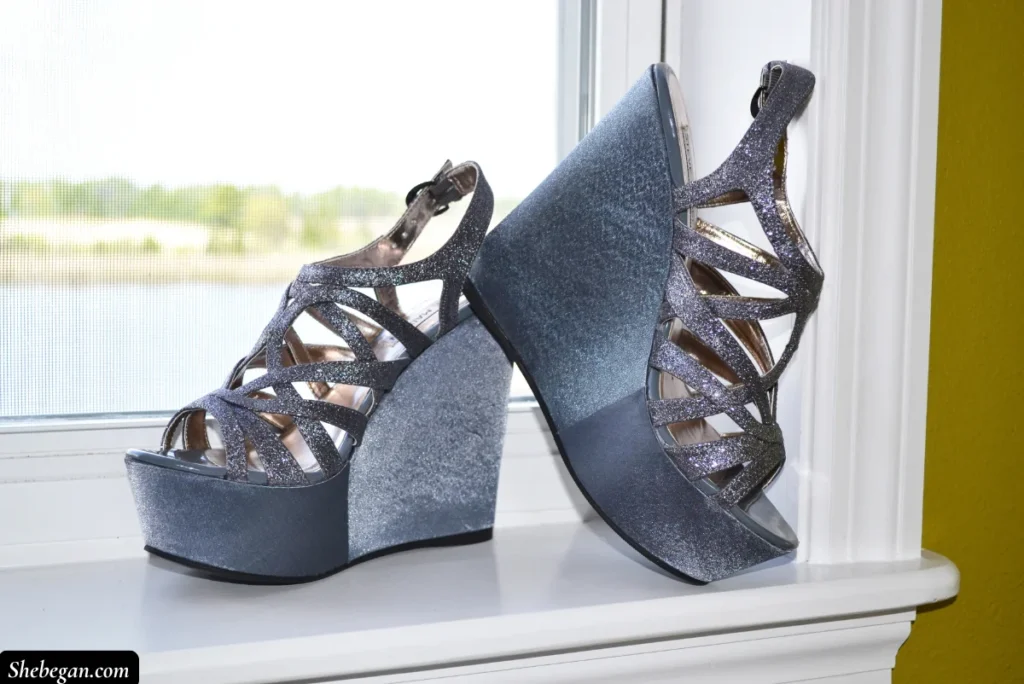
Wedge heels are not all made the same. Some have a solid wedge running from the back of the shoe toward the front, while others have different layers or materials. Some also have a platform underneath the front of the foot.
This matters because the heel is part of the shoe’s overall structure. A professional needs to look at how the heel, sole, and upper work together before deciding how much can be removed. A repairer may be able to shorten one pair easily but recommend leaving another pair alone.
2. Decide how much height you want to remove
Think about the height you actually want before taking the shoes anywhere. Measure the existing heel and decide whether you want a small reduction or a major change.
Small reductions are generally easier to work with than dramatic changes, but there is no single amount that is safe for every shoe. Some professional repair services advertise reductions of around 5 to 10 mm depending on the shoe’s construction, while other shoe-repair guidance notes that removing around half an inch may already be enough to affect the balance of some heels.
That is why it is better to have the exact shoe assessed instead of deciding that every wedge can simply lose the same amount of height.
3. Know when to see a professional
If the wedge is expensive, has a complicated sole, has a molded heel, or needs more than a very small reduction, I would take it to a cobbler or professional shoe repairer.
A professional has the right tools to make an even alteration and can check whether the shoe will still sit correctly afterward. This is especially important because taking too much from the heel can change the pitch of the shoe and make walking uncomfortable.
How to Shorten Wedge Heels Safely
A wedge is part of a shoe’s structure, and cutting it without knowing how much can safely be removed may affect the shoe’s balance or damage it. A safer approach is to use the following process.
1. Measure the current heel height
Start by measuring the heel from the point where it meets the shoe to the ground-contact area. Measure both shoes so you know you are working with the same height.
Write down the current measurement and the height you would ideally like. This gives the shoe repairer a clear idea of what you want rather than leaving the alteration open-ended.
2. Decide on a realistic reduction
Do not assume that you can turn a very high wedge into a very low one without changing the way the shoe feels.
A small reduction may be possible while keeping the shoe close to its original shape. A larger reduction can affect the angle between the heel and the front of the shoe, which may change how your foot sits inside it. Professional shoe repair sources specifically warn that excessive shortening can affect the balance and walking comfort of a shoe.
3. Have the heel professionally altered
Take the shoes to a reputable cobbler or shoe repair shop and explain how much lower you would like them to be.
The repairer can inspect the construction and determine whether the requested reduction is possible. Depending on the shoe, they may remove material from the heel and refinish the bottom so the shoe still has a clean, even base.
This is much safer than trying to cut through the heel yourself with a kitchen knife, saw, or other household tool.
4. Check the finished shoe before wearing it out
Once the alteration is complete, try the shoes on indoors and walk around slowly. Pay attention to whether the shoes feel level, stable, and comfortable.
Do not immediately wear them for several hours just because they look good after the repair. Give yourself time to notice whether anything feels different. If the shoe feels unstable, forces your foot into an uncomfortable position, or causes pain, stop wearing it and have the repair checked.
What Are The Benefits Of Shortened Wedge Heels?
Shortening a wedge can make sense when the original height is getting in the way of actually wearing the shoes. However, the benefits depend on the individual shoe and the reason you wanted the alteration in the first place.
1. They can feel easier to manage
If you struggle with a very high wedge, lowering it may make the shoe feel more manageable. Lower, more stable heels are also generally recommended when comfort and stability are priorities.
2. They can give you some height without as much heel
A shortened wedge can still give you the lifted look you wanted without keeping the full original height. This can be useful if you like the design of the shoe but feel that the original heel is too dramatic for your everyday style.
3. You get to keep a shoe you already love
Sometimes the problem is not the shoe itself. You like the color, shape, material, and overall design, but the heel is simply too high.
If a professional confirms that the shoe can be altered safely, shortening it can give you a way to keep wearing a pair that might otherwise stay in your closet.
Are There Any Drawbacks to Shortened Wedge Heels?
Yes. Shortening a wedge is not automatically an improvement, and it is worth thinking about the possible downsides before making the change.
1. The shoe may feel different
Changing heel height changes the way your foot sits in the shoe. Even if the alteration looks small from the outside, you may notice a difference when you walk.
This is why professional assessment matters. A heel is designed as part of the whole shoe, so changing one part can affect the rest.
2. Too much shortening can affect stability
Removing too much height can alter the shoe’s original balance and pitch. This can make the shoe uncomfortable or difficult to walk in. Current shoe-repair guidance repeatedly points to balance as one of the main limitations when reducing heel height.
3. The alteration may not be possible on every wedge
A molded wedge, platform wedge, or unusually constructed shoe may not be a good candidate for shortening. It depends on how the shoe was made and where the structural support sits.
A professional can tell you whether your particular pair can be altered before any permanent work is done.
Can Block Heels Be Cut Down?
Yes, some block heels can be shortened, but the same caution applies to them as to wedge heels. The amount that can be removed depends on the construction of the shoe and how much the alteration would affect its balance.
If you have block heels that are too high, take them to a professional shoe repairer rather than cutting them yourself. A cobbler can inspect the heel and determine whether it can be lowered safely.
The same principle applies to other types of high heels. The fact that a heel is thick or sturdy does not automatically mean you can remove a large section from it.
Alternative Solutions If Your Wedge Heels Are Too High
If you are not sure about permanently shortening your shoes, you have a few other options.
1. Choose a lower wedge
If the height is the main problem and the shoes are still new, replacing them with a lower wedge may be the simplest option. This avoids permanently changing a shoe that was designed around its original height.
2. Try a supportive insole
An insole will not actually lower the heel, but it can add cushioning and support if the shoe otherwise fits well. The American Podiatric Medical Association notes that shoe inserts can provide cushioning and support, although they are not a replacement for professional treatment of underlying foot problems.
3. Ask a cobbler before making any changes
If you really love the shoes, this is probably the option I would choose. Take them to a professional and ask what can realistically be done. You may find that only a small reduction is possible, or the repairer may suggest another alteration that makes more sense for that particular shoe.

Frequently Asked Questions About Shortening Heels
Can I shorten wedge heels myself?
It is possible to alter some heels, but I would not recommend cutting a wedge yourself unless you have the proper shoe-repair knowledge and equipment. Changing heel height affects the structure and balance of the shoe, and cutting too much can make the shoes uncomfortable or unsafe to walk in. A professional shoe repairer can assess the shoe before making a permanent alteration.
How much can a wedge heel be shortened?
There is no universal amount because wedge construction varies. Some professional repair services advertise reductions of around 5 to 10 mm, while other guidance suggests that around half an inch may be the practical limit for many heels before balance becomes a concern. The exact amount should be decided based on the individual shoe rather than a fixed rule.
Can a cobbler shorten wedge heels?
Yes, a cobbler or professional shoe repairer may be able to shorten a wedge heel, depending on its construction. They can inspect the shoe and determine whether the requested reduction is realistic without affecting its balance or making it difficult to walk in.
Will shortening a heel change how the shoe feels?
It can. Reducing heel height changes the angle of the shoe and can change where your weight sits when you walk. This is one of the main reasons heel shortening needs to be done carefully.
Wrapping up
If you have a pair of wedge heels that you love but rarely wear because they are too high, shortening them may be an option. The important thing is to avoid treating the heel like a piece of furniture that can simply be cut down to size.