

The sunbeds work by emitting UV radiation from lamps. The lamps will generate different levels of UVA and UVB, depending on the machine that you’re using. Some sunbeds are also able to emit infrared light, which is a type of radiation that can increase your body temperature.
As people get more and more used to the idea of using sunbeds, there are still many myths circulating about how long after sunbed does tan show?
It can take about 3-5 sessions before tan begins to show when using a sunbed. But the number of sessions it will show is constant, it depends on some factors. The amount of time it takes for your tan to show depends on the strength of the sunbed, your skin type and how frequently you go.
ALSO READ: Should I Moisturize After Tanning Bed?
Factors Determining How Long Your Tan Will Show in Sunbed
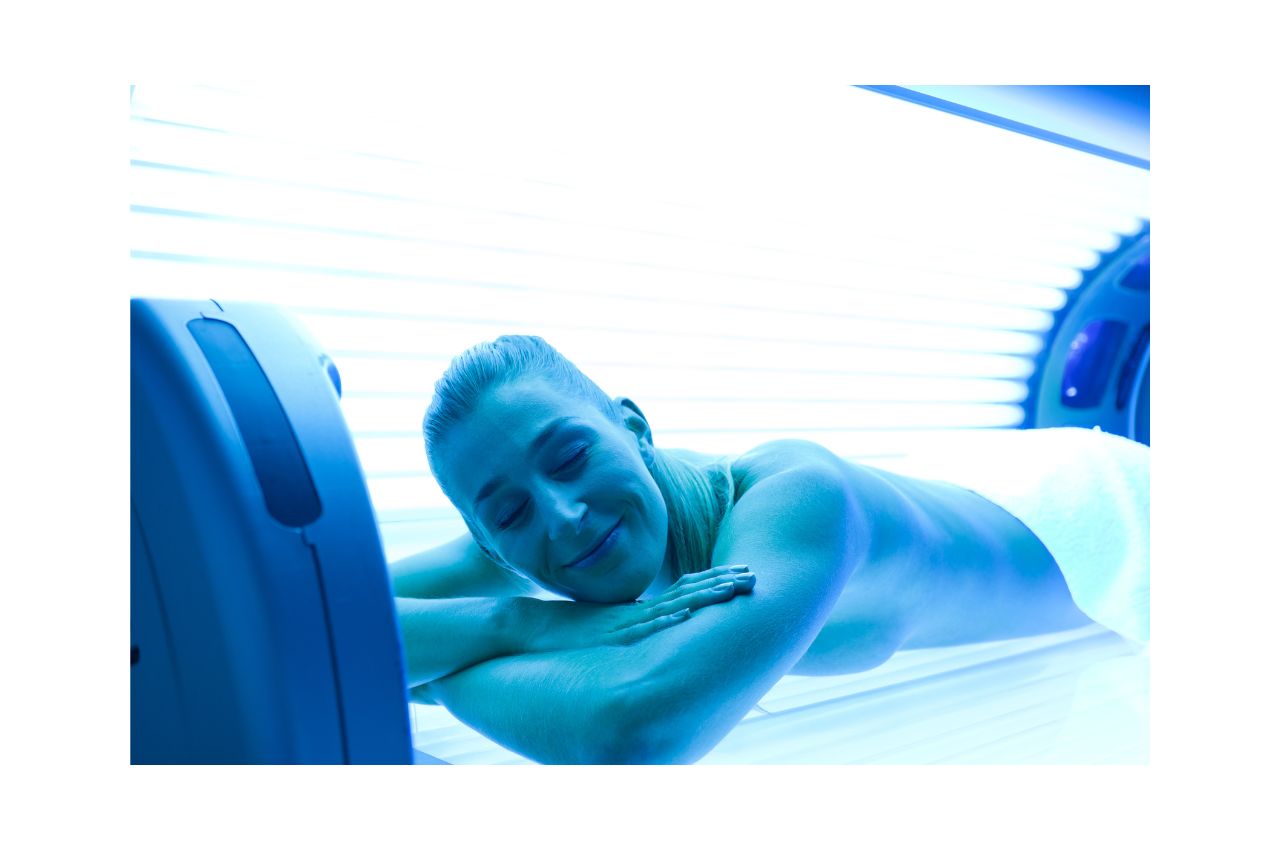
1. The stronger the sunbed, the quicker it will work
A medium-strength bed will give you a tan in about three to four days, while a high-strength bed will produce results in one to two days. In order for sunbeds to be effective and tan your skin, they need to emit UVB rays. These rays are responsible for stimulating melanin production in our bodies.
After this has happened, the melanin works by absorbing further UVB rays, which then leads to our skin becoming darker over time as more of it is produced by our bodies in response to receiving those initial doses of UVB light from the bed.
2. Skin type
Your skin type can also affect how long it takes for your tan to appear. Depending on the individual, l most people can see results after just one session at a tanning salon. However, it may take several sessions before you see your desired results.
If you have pale skin and use a high-strength sunbed, it’s likely that your tan will show even faster than someone with darker skin who uses the same machine.
3. Frequency of use
When you first use a sunbed, there will be no visible change to your skin for about 4 hours. However, if you’re using high-pressure beds, then this period may be shorter. After 4 hours, your skin will start to look slightly darker than normal and this will continue until the end of the session.
But to achieve a base tan depending on your skin tone, it can take about 3-5 sessions of frequent sunbed usage. Two sessions each week should be plenty to safely and gently enhance your tan. The effects of sunbeds are cumulative, so the more sessions you have, the darker your skin will become.
Read Also: Best Bronzers for Faking a Tan: List of Best Drugstore Bronzers and How to USE them
How Long Does it Last?
A tan will fade over time due to natural exfoliation and exposure to oxygen in the air and water. A good rule of thumb is that if you don’t use sunscreen while swimming or sweating profusely, then you should expect your tan to fade in about three days.
How Many Tanning Sessions Do You Need to Get Your Desired Results?
Most people will notice a difference in skin tone after the first few sessions. In 6-10 sessions, you should have an excellent foundation tan. After that, one or two treatments each week will keep your tan all year.
The number of tanning sessions you need to get results depends on your skin type. For fair-skinned people with sensitive skin, it may take a few sessions before you see any color.
For darker-skinned people with sun-sensitive skin, it could take up to six sessions before seeing a noticeable change in skin tone. The good news is that you can see results after just one session. It’s just that they’ll be subtle.
Why Am I Not Tanning on Sunbed?
There are many reasons why you may not be tanning on the sunbed:
1. You are too pale
If you’re naturally pale, it can take a while to build up enough melanin in your skin before you start to see results. If you’re already tanned from previous sessions, try spending longer on the sunbed or upping your exposure time.
2. Your skin is sensitive or fragile
If your skin is sensitive or fragile, it’s best to avoid using the sunbed altogether. If you have eczema or psoriasis, ask your dermatologist for advice before using an indoor tanning facility.
3. Tanning Plateau
Another reason why you are not tanning on the sunbed is because your skin has reached a tanning plateau. It’s not uncommon to notice a dip in your tan when you use a sunbed. This is because your skin has reached tanning plateau, where it produces more melanin than it needs to protect itself from the sun.
Skin goes through a natural tanning cycle, which lasts about two weeks. During this time, it produces its own melanin and absorbs UV rays from the sun or sunbeds, which causes the skin to darken. Once enough melanin has been produced, the body stops producing more and starts to break down some of what is already there instead.
This process can take anything from a couple of days to a couple of months depending on how often you’ve been tanned or how much UV exposure you’ve had in total. Once your body has reached tanning plateau, going back on the sunbed will only cause further damage and premature ageing.
4. You’re using sunscreen
If you’re wearing a high sunscreen protection factor (SPF) and you’ve put it on properly, you may be preventing yourself from tanning. This is because SPF acts as a physical barrier to UVB and UVA rays and stops them reaching the surface of your skin.
5. Tanning time
The amount of time you spend in the sunbed is also a crucial factor if your skin is not tanning. There are some factors that influences how much time should be spent in a sunbed. Tanning time will depend on the following factors:
- Skin Type: If you have fair or sensitive skin, it will take longer for you to tan than someone with darker skin.
- Time of Day: Tanners who use their bed in the morning or early afternoon will get more exposure than those who use it in the evening or at night.
- Sunbed Settings: Lower settings offer less UV exposure than higher settings do.
Risks Associated with Sunbeds
The sunbed is a popular way to get a suntan, but it is not safe. The risks associated with using sunbeds are known to most people. However, there are still many who continue to use them in spite of the risks. The following are some of the major risks associated with using sunbeds:
1. Skin cancer
The International Agency for Research on Cancer (IARC) has listed UV radiation as a known human carcinogen and has classified sunbeds as Group 1 carcinogens. The IARC also states that UV radiation from the sun or sunbeds can cause melanoma, the most deadly form of skin cancer.
ALSO READ: Best Body Firming Creams for Saggy Skin: We Tested Body Firming Creams
2. Premature ageing
A study by researchers at the University of Texas Medical Branch found that people exposed to UVA rays were two times more likely to develop wrinkles than those who were not exposed to UVA rays.
3. Eye damage
Exposure to UV rays can cause eye damage like cataracts and macular degeneration. Macular degeneration is a condition where there is damage to the macula, an area at the back of your eye that helps you see fine detail clearly. The most effective way to protect yourself from the harmful effects of sunbeds is to avoid using them altogether.
There are many reasons why people use sunbeds. They may be using them to treat psoriasis or other skin conditions, or they might simply enjoy the relaxing experience of a tanning bed. The truth is that tanning beds can be safe if you are careful and follow the instructions given by your tanning salon.
How to Safely Use a Sunbed
The sunbed is a great way to get instant results, but it’s not without risks. You can safely use a sunbed as long as you follow these guidelines.
1. Don’t exceed the recommended number of sessions
This will reduce the chance of developing skin damage or cancer from overexposure to ultraviolet (UV) radiation from the sunbeds. The main thing to remember is that the body can only take so much sun exposure and overexposure can cause serious problems such as skin cancer.
2. Use a safe working sunbed
The first thing to do is check that the sunbed is safe and working correctly. If there are any cracks or holes in it, don’t use it until they have been fixed.
3. Use the right tanning lotion
Make sure you get the right tanning lotion for your skin type usually indicated by the SPF. If you have dry skin, you may also want one with moisturizing ingredients such as Aloe Vera or Shea butter. Don’t use oil-free lotions as these tend to burn more easily than others.
Check out this guide on choosing the right indoor tanning lotion for more insights.
4. Follow instructions
Read the instructions carefully before using the bed and make sure that you apply your tanning lotion evenly across your body, don’t forget your face and neck.
5. Use protective eyewear
You should also wear goggles or glasses to protect your eyes from UV rays during your session. Even if you don’t look directly at the light source. Make sure that the eyewear provided at your salon is clean and in good condition. If it’s old or damaged, ask for new ones before you start tanning.
Conclusion
The tanning result when using a sunbed depends on different factors. It requires some patience and consistency to get your desired tan. Go through to the article to find out more information on how long it takes.


