
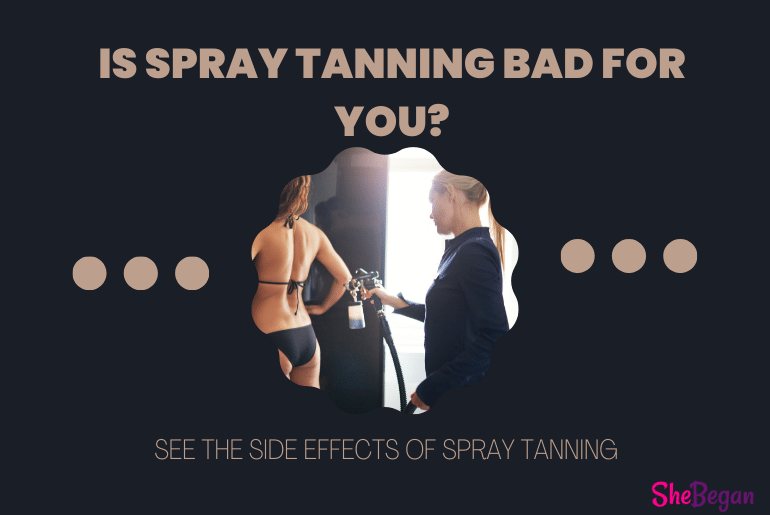
Spray tanning is a great way to improve your appearance and feel more confident. It can also help you to avoid sunburn and reduce the risk of skin cancer. However, there are some downsides to spray tanning that you should be aware of before deciding whether or not it’s right for you.
Spray tanning has become an increasingly popular trend, and has received a lot of attention in the media. However, with health concerns brought up by the FDA and other health organizations, the question must be asked: is spray tanning bad for you?
Spray tanning is not bad for you when use appropriately. Spray tanning is not bad for your health. In fact, it is very good for you to compare it to other sources of tanning. However, everything good thing has its side effect and so is spray tanning.
Do Spray Tans Damage Your Skin?

Spray tans are safe for your skin. It’s true that the application of a self-tanner can cause temporary redness and irritation. However, as long as you follow the instructions provided by your tanning expert and use high-quality products that contain natural ingredients, you won’t experience any negative side effects from spray tanning.
READ ALSO: Do Bronzers Help You Tan?
Spray tanning is safe for your skin because it uses cosmetic products that are approved for use on human skin. The DHA (dihydroxyacetone) used in self-tanners is a sugar derived from sugar beets or sugar cane. When applied to the skin, DHA reacts with amino acids on the top layer of your skin to produce melanin a pigment that gives your skin its color.
This process results in a temporary color change that lasts anywhere from one day to 10 days depending on how long you expose yourself to ultraviolet radiation after applying the tanner. Most people choose to apply their tanner before going out at night so they can maintain their tan longer than one day if they don’t want to look like Casper.
However, like any other cosmetic procedure, spray tans can cause irritation and redness in some people. If you’re concerned about your skin, be sure to ask your technician if they’re using a paraben-free formula.
What Are the Side Effects of Spray Tanning?
Spray tanning is a convenient and inexpensive way to get a year-round tan. However, some people may experience side effects from spray tans.
1. Trigger for allergies
If you have sensitive skin or allergies, spray tans may trigger an allergic reaction. This is because they use products that contain fragrances and other chemicals that may irritate your skin or trigger an allergic reaction.
DHA may not only be hazardous to your health when inhaled but can also cause allergic reactions. The most common allergy to sunless tanning products is contact dermatitis, an itchy, red, and sometimes painful skin rash. Allergic reactions to spray tanning are rare, but if you’re going to have one, it’s most likely to happen during your first session.
2. Asthma Instigator
If you have asthma or other respiratory problems, you may not want to use a spray tanning booth. The chemicals used in the spray tanning process can worsen your asthma symptoms. This is especially true if you are using an at-home spray tanning kit and don’t follow instructions carefully.
If you have asthma, this could also be an issue for you because spray tans have been known to trigger asthma attacks in some people. In fact, some spray tan manufacturers have even put a warning on their products stating they may cause an attack if inhaled while applying the product to your body. If you have asthma, spray tanning may not be the best choice for achieving a healthy, sunless glow.
3. DHA may not be ok
Dihydroxyacetone (DHA) is the active ingredient in spray tanning solutions. It’s a chemical that reacts with dead skin cells to form brown pigments. DHA can cause minor skin irritation and redness for a short time after application, but it’s not considered toxic when used as directed by manufacturers.
READ ALSO: Does Olive Oil Remove Fake Tan?
However, there are some concerns about using DHA on the skin before it has been fully exfoliated or moisturized. This can lead to uneven coloration and an orange-brown hue on your face.
What Not To Do Before Getting a Spray Tan

If you’re getting a spray tan, there are a few things to avoid doing right before your appointment.
1. Don’t wax or shave
Waxing and shaving are both great ways to keep your skin looking smooth and soft, but they can create problems for spray tans. Waxing pulls the hair up from the root and can cause ingrown hairs, which are difficult to see but can show up in your tan as dark spots. Shaving too closely creates a similar problem because it causes small cuts on the skin’s surface that can bleed when you get sprayed with the solution.
2. Don’t take a hot bath
If you have time before your appointment, take a shower and use cold water to wash. While a hot shower may feel relaxing, it will open all your pores and cause the spray tan to settle into your skin unevenly.
3. No facial
If you’re planning on getting a spray tan right after having your face professionally exfoliated, don’t do it. You might end up looking like an orange chipmunk with streaks of red and purple on your face. The chemicals in most exfoliating products can cause discoloration when combined with the solution used for spray tanning.
If you are going all out for a day of pampering, have either a facial or spray tan don’t do both. Avoid getting a facial immediately before receiving a spray tan, because the skin will be chapped and open to let in the color; this can result in blackheads looking like acne. We recommend 24hrs space between getting a facial and spray tan.
4. Don’t wear tight clothing
If you have an upcoming spray tan appointment, it’s best to avoid wearing tight while going for your appointment. While some people might think it would be best to wear tight clothing so as not to mess up their spray tan lines, it actually does the opposite. The tighter the clothing, the more likely it is for color to collect in certain areas of your body.
That can lead to uneven color distribution, or even missed spots on your skin that could result in splotchy tan lines afterward. You don’t want to get a tan on areas of your skin that might not be able to breathe. That means no tight jeans, leggings, or shirts. Instead, wear loose-fitting t-shirts and sweatpants or shorts to your tan appointment.
5. No acne medication
Acne medications can cause discoloration on the skin, which could make it difficult for the technician to properly assess your skin tone. If you have acne, try not to put any products on it on the day of your spray tan appointment.
Acne medication can cause your spray tan to look uneven or blotchy, so it’s best to avoid it. Wait until 24hrs after your spray tan to apply any new products or medications.
6. Don’t over-exfoliate your skin
The day before your spray tan, avoid exfoliating or using abrasive scrubs. This is because the process of exfoliation strips away some of the natural oils from the surface of your skin. The more you exfoliate, the more oil that is removed, leaving you with dry and flaky skin.
The day before your spray tan, avoid any products that have an exfoliating effect on your skin. This includes scrubs, scrunching products, or anything else that can remove dead cells from your skin’s surface.
7. No laser treatment
If you have recently undergone laser hair removal or microdermabrasion treatments, give them time to heal before getting a spray tan. “The color will come out unevenly if you do [the spray tans] right away. “It will look like you have dark spots where you just got treated.”
READ ALSO: Does Aftersun Work After Sunbeds?
If you’re getting laser hair removal or another kind of laser treatment, wait at least two weeks before getting a spray tan. The chemicals in the tanning solution can cause burns if they come into contact with skin that has been treated with lasers.
Can Spray Tans Cause Cancer?
No, a spray tan cannot cause skin cancer because it does not expose your body to UV rays. It also does not contain any of the chemicals that are associated with skin cancer.
The Food and Drug Administration (FDA) has studied the safety of spray tans, and there is no evidence that they cause cancer. In fact, the agency found that there was no evidence that any ingredients used in tanning products were carcinogenic.
Spray tanning does not cause cancer. The most common active ingredient in spray tan products is dihydroxyacetone (DHA), a colorless, non-toxic chemical that reacts with the amino acids in your skin to create a temporary brown color.
Although DHA has been approved by the FDA as a safe cosmetic ingredient, there is some concern that it could be absorbed into your bloodstream and pose health risks. However, studies have shown that the amount of DHA you absorb from a spray tan is insignificant compared to what you’d get from eating fruits and vegetables or taking oral supplements with DHA.
Cancer-causing ingredients are not used in spray tanning products, so you don’t need to worry about getting cancer from your spray tan. The FDA also evaluated whether ingredients used in self-tanners could cause allergic reactions or irritation in people with sensitive skin. The agency found that these reactions are rare and most often occur when someone applies too much product or doesn’t follow instructions properly.
Conclusion
Overall, spray tanning appears to be a safe and effective method of getting a bronze glow. Unfortunately, there are still many unknowns about the long-term effects of these products on the human body, but for now, you can enjoy a beautiful sunless tan without worrying about your health.
The key is moderation and balance. Just like with anything else, everything in moderation is fine and a little spray tanning can spice up your life and your look without hurting you.


