
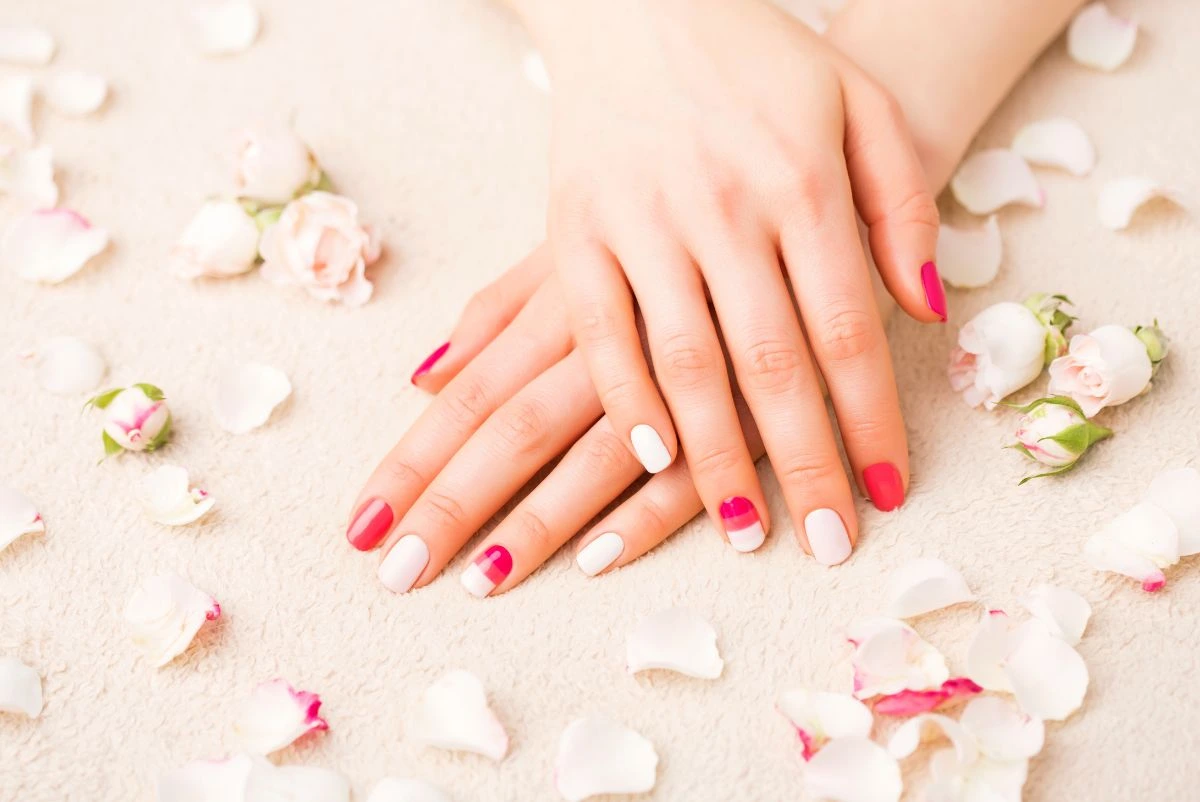
Choosing between an acrylic overlay vs gel overlay can be a little confusing when both can give your natural nails a neat, polished finish. The main difference is how the products are applied and how they feel on your nails. Acrylic overlays tend to create a firmer, more rigid coating, while gel overlays can offer a more flexible finish.
Neither option is automatically better for everyone. Your choice depends on the look you want, your budget, how much maintenance you are comfortable with, and the condition of your natural nails. I’ll break down the benefits and differences of acrylic and gel overlays so you can decide which one makes more sense for your next manicure.
- Acrylic Overlay vs Gel Overlay: Which Is Better?
- What Is An Acrylic Overlay?
- Benefits of Acrylic Overlay
- What Is A Gel Overlay?
- Benefits of Gel Overlay
- Acrylic Overlay vs Gel Overlay: Key Differences
- Which Overlay Should You Choose?
- How To Care For Acrylic And Gel Overlays
- Frequently Asked Questions
- Wrapping up
Acrylic Overlay vs Gel Overlay: Which Is Better?
An acrylic overlay may suit you if you prefer a firm, structured coating, while a gel overlay may be a better fit if you want a flexible finish and a natural-looking manicure. Both can reinforce natural nails, and neither is guaranteed to last longer or cause less damage in every situation.
Here is a quick comparison to help you understand the main differences.
| Feature | Acrylic overlay | Gel overlay |
|---|---|---|
| Main material | Acrylic liquid and polymer powder | Gel product formulated for nail enhancements |
| How it hardens | Sets through a chemical reaction | Usually hardens under a compatible UV or LED lamp |
| Feel | Generally firm and rigid | Often more flexible, depending on the gel |
| Appearance | Can create a smooth, structured finish | Can give a glossy, natural-looking finish |
| Cost | May be less expensive in some salons | May cost more in some salons |
| Maintenance | Needs attention as natural nails grow | Also needs maintenance as natural nails grow |
| Best suited for | People who prefer a firmer coating | People who prefer a more flexible coating |
The best choice comes down to your needs and the specific products your nail technician uses. It is also worth remembering that an overlay usually reinforces the natural nail without adding length. If you want longer nails, you may need an extension service instead.
What Is An Acrylic Overlay?

An acrylic overlay is a layer of acrylic product applied over the natural nail to add structure and help reinforce it. Unlike a traditional acrylic nail extension, an overlay does not automatically add extra length to your nails.
Acrylic nail systems typically use a liquid monomer and polymer powder, which combine to form a workable material that sets into a firm coating. Once it has hardened, the technician can shape and finish the nail to create the look you want.
Acrylic overlays are often chosen by people who prefer a more rigid nail enhancement. They can be finished with a natural-looking colour, a classic French manicure, or other nail designs.
Although acrylic products can help reinforce natural nails, they do not make the nails completely resistant to breaking. Proper application, suitable length, and careful maintenance still matter.
Benefits of Acrylic Overlay
Acrylic overlays have several advantages, particularly for people who prefer a firmer finish and a structured manicure.
1. Provides a firm, protective coating
One reason people choose acrylic overlays is that they create a firm coating over the natural nail. This can help reinforce the nail during everyday activities and may reduce some types of bending or breakage.
However, the coating does not make your nails indestructible. Using your nails to open packages, scrape surfaces, or handle heavy objects can still cause damage. The overlay also needs to be applied correctly so it does not place unnecessary stress on the natural nail.
2. Can help reinforce natural nails
If your natural nails tend to split or break before they reach your preferred length, an acrylic overlay may help provide extra structure while they grow. The coating can make the nails feel firmer and give them a more uniform appearance.
The important thing is to have realistic expectations. An overlay does not repair every nail problem, and it cannot guarantee that your natural nails will grow stronger underneath. If your nails are already brittle, painful, discoloured, or damaged, it is better to address the problem before covering them with an enhancement.
3. Can be shaped to suit your nails
Acrylic products can be shaped and refined to create a smooth finish. This gives you room to choose the nail shape and appearance you prefer, whether you like a short, rounded manicure or a more defined square shape.
Your nail technician can help you choose a shape that works with your natural nails and daily activities. Keeping the nails at a manageable length may also help reduce the chance of catching or breaking them.
4. Works well for a structured finish
Acrylic overlays are useful if you prefer a manicure that feels firm and holds a defined shape. The product can create a structured finish without requiring an extension, provided the natural nails already have the length you want.
This can be helpful if you enjoy a neat, polished manicure but do not want to add extra length. Still, the final result depends on the technician’s skill, the product used, and the condition of your natural nails.
5. Does not have to add extra length
One advantage of choosing an overlay is that you can keep your natural nail length. You do not need to add tips or build an extension simply to have a reinforced manicure.
This is useful if you prefer shorter nails for typing, working, or handling things throughout the day. Your technician can apply and shape the coating to suit the length you already have.

What Is A Gel Overlay?
A gel overlay is a gel product applied over the natural nail to add structure and create a finished manicure. Like an acrylic overlay, it can reinforce the nail without necessarily adding extra length.
Gel overlays come in different types, including soak-off builder gels and hard gels. These products do not all behave the same way, so their flexibility, thickness, and removal methods can vary.
Most UV or LED gel systems need to be cured under a compatible lamp to harden properly. The product must be applied according to its manufacturer’s instructions, as using the wrong lamp or applying layers that are too thick can affect curing.
Gel overlays can be finished in different colours and styles, including glossy, matte, and natural-looking manicures. If you prefer a smooth finish that does not look overly thick, a suitable gel overlay may be worth considering.

Benefits of Gel Overlay
Gel overlays are popular with people who want a neat manicure with a finish that can feel more flexible than traditional acrylic.
1. Offers a flexible finish
Many gel overlay products have more flexibility than traditional acrylic systems. This can make them feel more comfortable for some people, especially when they prefer a coating that moves slightly with the natural nail.
However, flexibility varies by product. A soft gel and a hard gel are not identical, so it is worth asking your nail technician which type they use and how it is likely to feel.
2. Can create a natural-looking manicure
Gel overlays can be applied and shaped to create a smooth, understated finish. If you prefer short, neat nails with a little extra structure, you can choose a clear or neutral gel and keep the look simple.
You can also add colour or nail art if you want something more noticeable. The final appearance depends on the gel product, the thickness of the application, and how the technician shapes and finishes the nails.
3. Comes in different finishes
One of the appealing things about gel overlays is the range of finishes available. You can choose a clear coating, a soft nude shade, a glossy colour, or a finish that works with your preferred nail design.
This makes gel a versatile option for different styles. If you like changing your manicure from time to time, ask your technician which products work well with your preferred colours and whether the chosen gel can be safely removed or filled in later.
4. Can be convenient to maintain
Some gel overlays are designed to be soaked off, while others are more resistant to solvents and need to be filed down by a trained technician. The type of gel you choose affects how it should be maintained and removed.
It is worth discussing this before your appointment, especially if you prefer a service that does not require extensive filing during removal. Gel still needs proper upkeep as your natural nails grow, and it should not be peeled or picked off when it starts lifting.
Acrylic Overlay vs Gel Overlay: Key Differences
Now that you understand each option, let’s look more closely at the differences that may affect your decision.
1. Composition and application
Acrylic overlays are generally made by combining a liquid monomer with polymer powder. The mixture is applied to the nail and sets through a chemical reaction.
Gel overlays use a gel product that is applied in layers and usually hardened under a compatible UV or LED lamp. Although the two systems have different application methods, gel products can contain ingredients from the broader acrylic chemical family. The names do not mean that the products are completely unrelated.
Both methods require careful nail preparation and proper application. The product should be applied to the nail plate without unnecessary contact with the surrounding skin.
2. Curing and setting time
Traditional acrylic products set as the liquid and powder mixture reacts. Gel products usually need a compatible lamp to cure and harden. This means the application process differs, and neither option is guaranteed to be faster in every salon.
The time required depends on the technician’s experience, the product system, the condition of your nails, and the finish you choose. If you are short on time, ask the salon how long the specific service usually takes rather than choosing based on the product name alone.
3. Flexibility and feel
Acrylic overlays tend to feel firmer and more rigid, while many gel overlays have a more flexible feel. This is one of the main differences people notice when comparing the two.
However, the type of gel matters. Some hard gels are designed to provide a firm structure, so it would be inaccurate to say that every gel overlay is soft or flexible. If comfort is your main concern, ask your technician to explain the product they plan to use.
4. Appearance
Both acrylic and gel overlays can give your nails a clean, polished appearance. The difference often comes down to the product, application technique, thickness, and finish rather than the material alone.
Gel overlays can work well for people who prefer a smooth, natural-looking manicure, while acrylic can create a firm, structured finish. Both can be shaped and finished in different colours, so you do not need to choose one solely based on the nail design you want.
5. Cost
The cost of acrylic and gel overlays varies by salon, location, product brand, nail length, and design. Acrylic may be less expensive in some salons, while gel may cost more in others. There is no universal rule that one option is always cheaper.
Before booking, check what the quoted price includes. A simple overlay may cost less than a service that includes intricate nail art, repairs, or removal of a previous set. You should also consider maintenance costs, since both types of overlays need attention as your nails grow.
6. Durability and maintenance
Acrylic overlays generally create a firm coating, while gel overlays can offer different levels of flexibility depending on the product. That difference alone does not tell you exactly how long either one will last.
Wear time depends on how the overlay was applied, the condition of your natural nails, your daily activities, and how well you maintain the manicure. As your natural nails grow, a gap appears near the cuticle area, so you may need a maintenance appointment or removal and a fresh application.
Rather than assuming acrylic lasts 12 weeks and gel lasts six weeks, ask your technician what maintenance schedule is appropriate for the product being used.
7. Removal and nail health
Both acrylic and gel overlays can contribute to natural nail damage if they are applied, maintained, or removed improperly. Aggressive filing can thin the nail plate, while peeling or picking off the product can remove layers of the natural nail.
Removal methods vary by product. Some gel systems can be soaked off, while hard gels may need careful filing. Acrylic products also require an appropriate removal process. Do not assume that every gel overlay can be removed in the same way.
If you notice pain, unusual discolouration, lifting, or changes in your natural nails, avoid covering the problem with another layer. Speak with a qualified nail professional or a dermatologist if the issue persists. You can also read our guide to removing acrylic nails at home without tools, but always follow the removal instructions for the specific product you have.
Which Overlay Should You Choose?
The best option depends on what you want from your manicure and how much maintenance you are comfortable with.
- Choose an acrylic overlay if you prefer a firmer, more rigid coating and a structured finish.
- Choose a gel overlay if you prefer a potentially more flexible coating and a natural-looking finish.
- Consider your budget by comparing the full service price and the cost of future maintenance at your preferred salon.
- Think about your natural nails if they are brittle, damaged, or showing unusual changes. An overlay is not a treatment for an underlying nail problem.
- Ask about removal before booking because soak-off gel, hard gel, and acrylic products may require different methods.
If you are still unsure, a qualified nail technician can help you select a product based on your nail condition, preferred finish, and daily routine. You do not need to choose the option that is most popular if another one suits your needs better.
How To Care For Acrylic And Gel Overlays
Whichever overlay you choose, a little care can help you keep your manicure looking neat and reduce unnecessary damage to your natural nails.
- Avoid picking or peeling the product. If the overlay begins to lift, arrange proper maintenance rather than pulling it off yourself.
- Do not use your nails as tools. Opening packages, scraping surfaces, and similar activities can put pressure on the coating and natural nail.
- Keep your appointments reasonable. As your nails grow, the gap near the cuticle can affect the balance of the enhancement. Follow your technician’s advice on when to return for maintenance.
- Choose a clean salon. Make sure tools are properly cleaned and disinfected between clients, and avoid services that involve cutting the cuticles unnecessarily.
- Follow the product’s removal instructions. Not every gel product is soak-off, and excessive filing can damage the natural nail.
- Give your nails a break when needed. If your nails become thin, brittle, or sore, consider taking a break from enhancements and allowing them to recover. Seek medical advice for persistent or unusual nail changes.
For more on keeping your nails in good condition, read our guide to nail hardener vs nail strengthener.

Frequently Asked Questions
Is gel overlay better for natural nails?
Gel overlay may be a suitable choice if you prefer a more flexible coating, but it is not automatically safer for every natural nail. Both gel and acrylic services can cause damage if the nail is over-filed or the product is removed incorrectly. The product type, application technique, and removal process all matter.
Which overlay lasts longer?
Neither acrylic nor gel overlay has a guaranteed wear time. How long the manicure lasts depends on the product, application, nail growth, daily activities, and maintenance. Your technician can recommend a suitable schedule based on the specific system used.
Is acrylic overlay cheaper than gel overlay?
Acrylic overlays may be cheaper in some salons, but prices vary by location, product, design, and technician. Compare the full cost of the service and future maintenance before deciding. A lower initial price does not always mean a lower overall cost.
Can you apply gel polish over an acrylic overlay?
Gel polish can be used over some acrylic enhancements, provided the products are compatible and applied correctly. Gel polish is a colour coating, while a gel overlay is designed to provide structure or reinforcement. Ask your nail technician which products work together and how they should be cured.
How often should overlay nails be maintained?
The right schedule depends on how quickly your natural nails grow, the product used, and the condition of the manicure. Artificial nails commonly need touch-ups every two to three weeks, although your technician may recommend a different schedule. Do not wait if the overlay becomes painful, lifts significantly, or causes changes to your natural nail.
Wrapping up
When comparing acrylic overlay vs gel overlay, the best choice depends on the finish you prefer, how you want your nails to feel, and the maintenance you are comfortable with.
Acrylic generally offers a firmer, more rigid coating, while many gel overlays provide a more flexible finish. Both can give your natural nails a neat, polished appearance when applied and maintained properly.


