

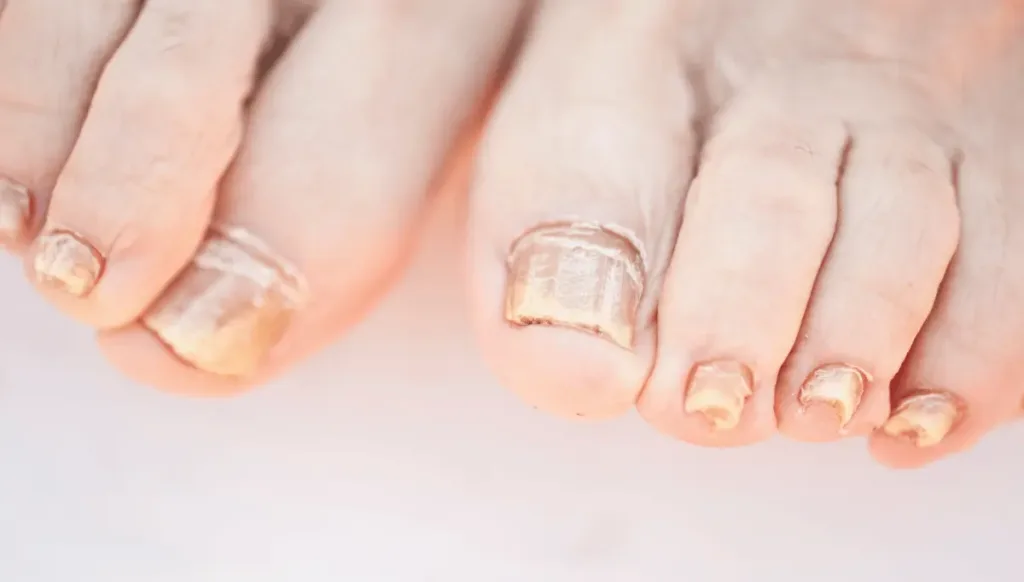
One of the accompanying symptoms of nail fungus is a distorted appearance and discoloration. There is often a noticeable pale yellow line running across the nails, disfiguring the appearance. Aside from discoloration, many people are of the opinion that nail fungus smells and that begs the question, does nail fungus smell?
Yes, nail fungus emit offensive smell truly. This smell is a result of the fungal infection breaking down keratin, the protein in nails, into compounds that emit the bad odor. If you notice an unusual or persistent smell emanating from your nails, it’s advisable to seek prompt attention for proper diagnosis and treatment to address the underlying fungal infection.
In this blog post, I’ll discuss the symptoms of nail fungus, why nail fungus smells, and preventive measures.

Why Does Nail Fungus Smell?
Nail fungus can become smelly in the long run and here is why;
1. The effects of dermatophytes
Nail fungus odor has its roots in fungal infections, commonly caused by dermatophytes or other fungi. These microscopic invaders find their way into the nail bed, setting the stage for the distinct smell that accompanies their presence.
2. Breakdown of keratin
The odor emerges as these fungi feast on keratin, the protein that makes up your nails. Picture it like a microscopic buffet where the fungi break down keratin into compounds that release a particular scent – not the most pleasant aroma.
3. Damp and warm environments
Fungi thrive in environments that are cozy and damp. Your feet, snug in shoes, create an ideal setting for these organisms to multiply. The resulting fungal overgrowth contributes to both the infection and the subsequent odor.
4. Poor nail hygiene
Neglecting your nails opens the door for fungi. When you skip proper cleaning and trimming, you create a welcoming environment for fungal parties. It’s a simple cause-and-effect scenario, better hygiene can be your first line of defense against both the infection and its odor.
5. Weakened immune system
Sometimes, it’s not just about the fungi; it’s about your body’s defenses. A weakened immune system, whether due to medical conditions or certain medications, can make you more susceptible to nail fungus, amplifying the chances of that distinct smell making an appearance.
5 Symptoms of Nail Fungus
Fungus infection leaves behind some telltale signs that your nails aren’t in a good place. Below are some of the clues;
1. Discoloration of the nails
Wondering if that discoloration on your nails is more than just a cosmetic issue? Nail fungus often reveals itself through visible signs. Keep an eye out for changes in color, like yellowing or a cloudy appearance. Sometimes, the nail may even detach from the nail bed – a clear indicator that something’s amiss.
2. Itchy or tender nails
Your nails shouldn’t be causing discomfort, but with fungus in the mix, they might start to itch or feel tender. If you find yourself absentmindedly scratching at your nails or experiencing an unusual tenderness, it’s worth investigating further.
3. Thickened or distorted nails
Healthy nails have a certain thickness and shape, but when fungus pays a visit, they might become thicker or distorted. This isn’t just a cosmetic concern; it’s a symptom you shouldn’t ignore.
4. Brittle nails
Nail fungus has a knack for making nails brittle. If your once-strong nails are now prone to breaking or crumbling, it’s a signal that something beneath the surface is affecting their structure.
5. Unusual odor
While we’re on the topic of symptoms, let’s not forget the sense of smell. Yes, nail fungus can bring along a distinctive odor, often described as somewhat unpleasant or sweet. If you catch a whiff that’s not typical for your nails, it’s time to investigate further
8 Ways to Treat Smelling Nail Fungus
Here are different ways to treat smelly nail fungus;
1. Clean with soap and water
Start with good old-fashioned hygiene. Regularly clean your feet, especially between the toes where fungi love to hang out. Use soap and water, and make sure to dry your feet thoroughly afterward. Clean, dry feet create an unfriendly environment for toenail fungus.
2. Antifungal topical treatments
Over-the-counter antifungal creams or ointments can be applied to the affected toenails. Follow the instructions on the product, and be consistent with the application. This can help curb the growth of the fungus.
3. Tea tree oil
Consider the natural route with tea tree oil. It has antifungal properties that can be beneficial. Mix a few drops of tea tree oil with a carrier oil like coconut oil and apply it to the affected nails.
4. Probiotics
Introduce probiotics into your daily routine. These beneficial bacteria can help maintain a healthy balance in your body, potentially aiding in the fight against fungal overgrowth. Consider adding probiotic-rich foods like yogurt, kefir, or fermented foods to your diet. Alternatively, you can opt for probiotic supplements under the guidance of a healthcare professional.
5. Oregano oil
Another natural remedy to consider is oregano oil. It contains compounds like thymol known for their antifungal properties. Mix a few drops of oregano oil with a carrier oil and apply it directly to the affected toenails. Remember to patch-test before widespread use.
6. Vinegar soaks
Vinegar, particularly apple cider vinegar, can create an environment that is hostile to toenail fungus. Mix one part vinegar with two parts warm water and soak your feet for 15–20 minutes a few times a week.
7. Medications
In severe cases, oral antifungal medications like diflucan may be prescribed by a healthcare professional. These medications work from the inside out and may require a longer treatment duration.
8. Consult a professional
If home remedies don’t show improvement or if the condition worsens, consult a healthcare professional. They may recommend stronger prescription medications or other suitable interventions.
Prevention of Nail Fungus and Odor
To prevent nail fungus odor, do the following;
1. Keep your nails clean
Regularly wash and dry your feet, especially between your toes. Cleanliness is key to keeping fungi away.
2. Wear breathable shoes
When it comes to shoes, opt for ones that let your feet breathe. Breathable shoes and moisture-absorbing socks create an environment that’s unfriendly to fungi. Keep your feet cool and dry.
3. Trim your nails regularly
Keep your toenails short and trim. This not only helps in preventing the fungus from spreading but also makes it easier to clean. Use a nail clipper and a file to keep your nails neat. Remember, short and clean is the goal.
4. Rotate your shoes
Give your shoes a breather by rotating them. Wearing the same pair every day traps moisture, creating a happy place for fungi. Switch it up to keep things dry and less fungus-friendly.
5. Avoid walking barefoot
Avoid walking barefoot in public places. Whether it’s the gym shower or the pool deck, these areas are hotspots for fungal activity. Protect your feet by wearing flip-flops or water shoes.
6. Dry thoroughly
After showering or swimming, make sure your feet are thoroughly dry. Fungi love moisture, so drying your feet completely reduces the risk of them setting up camp on your nails.
7. Wear cotton socks only
Opt for socks made of natural, breathable materials like cotton. Change them if they get damp during the day. Dry socks are a simple yet effective defense against fungal growth.

Conclusion
Toenail fungus can end up smelling if care is not taken. Therefore, tackling smelly toenail fungus requires a comprehensive and consistent approach. Begin with fundamental hygiene practices, keeping your feet clean and dry, and consider natural remedies such as oregano oil and tea tree oil.
Incorporate antifungal treatments, whether topical or oral, based on the severity of the condition. Stay patient and persistent, understanding that improvements may take time. Lifestyle adjustments, such as avoiding barefoot exposure in public spaces and maintaining a healthy diet, contribute to overall well-being and support the fight against toenail fungus.
Regular follow-ups with healthcare professionals are crucial, especially if home remedies prove insufficient.